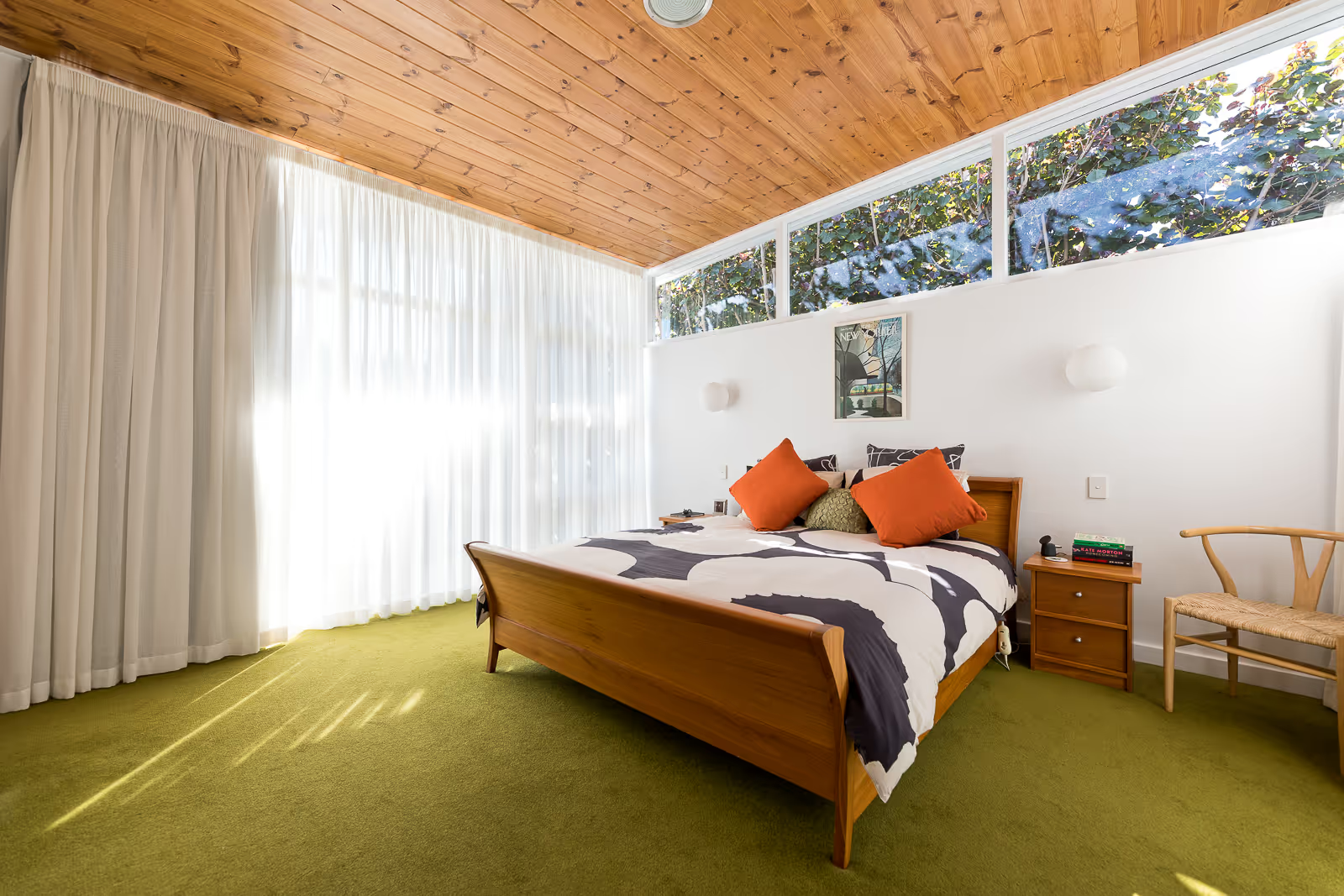


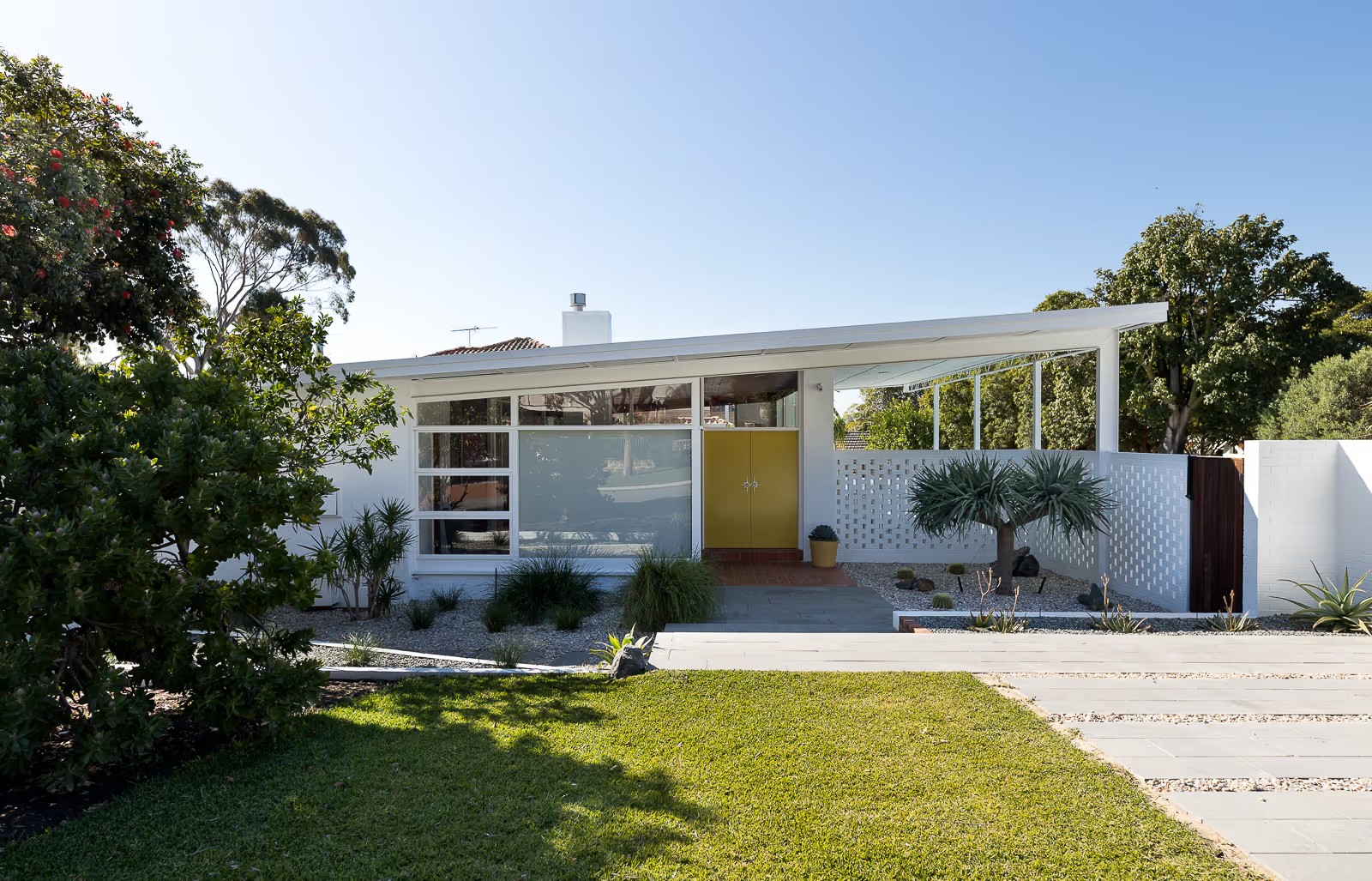
TL;DR: Heritage renovations in Perth are governed by two separate frameworks: State Heritage listing under the State Heritage Office of WA, and Local Government heritage listing under your relevant council. The obligations differ, and so does the approval process. Most cosmetic and internal works are permissible, but structural changes, additions, and anything that affects the streetscape will require development approval. The renovations that hold their character longest are the ones planned around the original fabric from the beginning, not adapted to work around it once construction is underway.
Most people who buy a Federation or interwar home in an inner Perth suburb are not buying a project. They are buying a house that already has something most new builds cannot produce. The proportions, the joinery, the pressed metal ceilings. They want the house to function properly. They do not want to lose what made it worth buying.
That is the tension most heritage renovations have to resolve. It is not a sentimental problem. It is a planning, design, and construction problem. Getting it right requires understanding what the regulations actually require, and what good heritage design looks like in practice.
What “Heritage Listed” Actually Means in Perth
Not every old house in Perth carries the same obligations. The distinction that matters most is whether a property is State Heritage listed or Local Government heritage listed. The two systems operate independently and carry different requirements.
A State Heritage listing means the property is registered on the State Register of Heritage Places, managed by the State Heritage Office of WA. These are properties assessed as having cultural heritage significance at a state level. Works affecting the significance of a State-listed place require consent from the State Heritage Office. For major works, a heritage architect is often required at the application stage.
A Local Government heritage listing sits within the relevant council’s Local Planning Scheme. These properties are identified as significant at a local level. The council assesses development applications and sets the conditions. Obligations vary between councils. The City of Fremantle, Town of Vincent, City of Subiaco, and City of Perth each have their own heritage lists and their own assessment criteria.
A third category catches many owners off guard: heritage precincts. A home may not be individually listed but may sit within a precinct designated for its collective streetscape or historical character. Works that affect the streetscape character, including front fences, new additions visible from the street, or changes to the facade, can still require approval even where the individual property has no specific listing.
To find out where your property sits, start with the State Heritage Office of WA register, then check your local council’s planning scheme and heritage list. Most councils publish these online. If the answer is not clear, call the council’s planning department and ask directly.
What Councils and the State Heritage Office Actually Assess
Once you know your listing type, the next question is what the approving body is actually looking at when it assesses proposed works.
The central concept is significance. Heritage officers are not assessing whether they like the design. They are assessing whether the proposed works affect the elements that give the property its heritage significance, and whether those works are reversible. Reversibility matters. A change that can be undone without permanent loss to the fabric of the building is treated differently from one that cannot.
For additions and new works, two principles apply consistently. First, additions should be set behind the established building line so the original facade reads clearly from the street. Second, materials should complement the original without attempting to imitate it. Good heritage design does not pretend to be old. It respects the original building by being clearly of its own time, while using materials and a scale that do not compete.
Documentation requirements are specific. Most heritage development applications require a heritage impact statement, which assesses how the proposed works relate to the significance of the place. For State-listed properties, or where a council requires it, a heritage architect may need to be involved in preparing the application.
On timeline: heritage development applications take longer than standard residential DAs. The involvement of the State Heritage Office adds a separate assessment layer. Build this into your project programme from the start. Owners who begin design work without factoring in heritage approval timelines regularly find their construction schedules compressed in ways that increase cost and risk.
Preserving Character in Practice
Regulations set the floor. Good judgement determines what actually survives construction.
Original materials are the starting point. In Federation and Edwardian homes, the materials that define character are specific: jarrah floors, pressed metal ceilings, original cornices, double-hung timber windows, face brick. Matching these when repair is required means sourcing compatible materials, not accepting the nearest available substitute. Salvage yards, specialist suppliers, and heritage trades exist in Perth for this reason.
The default position should be repair, not replacement. Replacement is faster and sometimes cheaper in the short term. It is rarely the right decision for original fabric that can be restored. Replacement changes the thing. Repair preserves it. When replacement is genuinely necessary, the decision should be documented and justified.
For additions, the principle is clarity rather than imitation. A well-designed contemporary addition that reads as a separate element next to a well-restored original home is credible. A fake period addition that attempts to match the original but cannot fully commit to it satisfies neither the heritage assessment nor the eye. Set the new work apart. Make it clearly new. The contrast, handled well, is honest.
Kitchens and bathrooms are the rooms most owners want to modernise, and they can be done well in heritage homes. The key is restraint in material selection and care in how the new work connects to the retained original fabric. A kitchen that opens from an original hallway should not feel like it arrived from a different house. The transition matters.
What gets lost in a heritage renovation and cannot be recovered is worth naming plainly. Original joinery that has been stripped. Pressed metal ceilings that have been sheeted over or removed. Encaustic tiles tiled over without care. These losses are permanent. They cannot be undone at a later stage. That is not a reason to treat original fabric as untouchable, but it is a reason to think carefully before anything is removed.
The Role of a Heritage Architect in Perth
A heritage architect is a registered architect with specialist knowledge in heritage methodology. What separates them from a standard residential architect is not the licence but the training: understanding of how heritage fabric behaves, how approving bodies assess works, and how to design additions and restorations that are both approvable and appropriate.
For State Heritage-listed properties, and for some Local Government-listed properties, council will require heritage architect involvement at the development application stage. This is not optional in those cases.
Even where it is not required, engaging a heritage architect early is generally worth it. The design decisions that affect heritage significance are made early. Revisiting them after approval is granted, or worse, after construction begins, is expensive.
To find a qualified heritage architect in Perth, the Australian Institute of Architects maintains a heritage register, and Australia ICOMOS lists practitioners with relevant expertise. Ask specifically about their experience with the listing type and era that applies to your property.
The relationship between the heritage architect and the builder matters more than most owners anticipate. A design intent that is well-considered on paper can be undermined during construction if the builder lacks experience with heritage methodology. The way original fabric is handled during demolition, how new materials are fixed to old structure, and how details are resolved on site all depend on the builder’s understanding of what they are working with. A builder who treats a heritage home like a standard residential project will produce a standard residential result.
Common Mistakes and How to Avoid Them
Starting construction before heritage approvals are finalised. This happens most often when owners assume their works are minor enough to proceed without approval. Heritage officers do not share that assumption. Unapproved works on a heritage-listed property can result in enforcement action, including orders to reverse the works at the owner’s cost. Confirm your approval obligations before any work begins.
Using a builder without heritage renovation experience. Substandard material matching, lack of care with original fabric during the demolition phase, and an inability to resolve heritage-specific details on site are common results. Heritage renovation is a different discipline from standard residential construction. The builder needs to understand the distinction.
Choosing replacement over repair because it is faster. The original joinery was made to last. So were the cornices, the windows, and the floorboards. A skilled tradesperson can restore most of what owners assume is beyond repair. Get an assessment before assuming something needs to go.
Using substitute materials that cannot hold period details. MDF mouldings and pressed fibre-cement panels do not replicate the behaviour or appearance of original timber joinery and masonry. They look like substitutes because they are. Where original details are being reinstated or extended, use materials that can carry them.
Not documenting the original condition before works commence. A thorough photographic and written record of the property prior to any works is valuable for the heritage assessment, useful during construction, and important for your own record. This step takes a day. Skip it and you lose the baseline permanently.
Treating the addition as the main event. The original home is the reason the property has value. An addition that overwhelms the original in scale, position, or material presence undermines the thing it was built to complement. Get the proportional relationship right at the design stage.
Frequently Asked Questions
Do I need council approval to renovate a heritage listed home in Perth?
In most cases, yes. The extent of approval required depends on the type of works and the nature of the listing. Internal works that do not affect significant fabric are often permissible without approval. Structural changes, new additions, and any works affecting the facade or streetscape will generally require a development application. Confirm the specific requirements with your council before proceeding.
What is the difference between a State Heritage listing and a Local Government heritage listing in WA?
A State Heritage listing means the property is registered on the State Register of Heritage Places and managed by the State Heritage Office of WA. These properties are assessed as significant at a state level. A Local Government heritage listing sits within the relevant council’s Local Planning Scheme and reflects local significance. The obligations and assessment processes are different for each. Some properties carry both a State and a Local Government listing.
Can I add a new extension to a heritage home without affecting its listing?
Yes, additions are possible, but they require careful design and, in most cases, development approval. Heritage officers assess whether the addition is set appropriately behind the original building line, whether materials are compatible without imitating the original, and whether the works are reversible. A well-designed addition that reads as clearly contemporary alongside a well-restored original will generally fare better in the assessment process than one that attempts to replicate period details.
Do I need a heritage architect for my Perth renovation?
For State Heritage-listed properties, and for some Local Government-listed properties, council may require heritage architect involvement at the development application stage. Even where it is not required, engaging one early is generally worthwhile. The design decisions that affect heritage significance are made at the beginning of a project. A heritage architect understands both what the approving bodies are assessing and how to design works that are appropriate to the original fabric.
How do I find out if my home is heritage listed in Perth?
Start with the State Heritage Office of WA register, which is publicly searchable. Then check your local council’s heritage list, which is usually published on the council’s website or within its Local Planning Scheme. If you are unsure after checking both, contact your council’s planning department directly and ask.
How long does a heritage development application take in Perth compared to a standard DA?
Heritage DAs typically take longer than standard residential applications. Where the State Heritage Office is involved, there is an additional assessment layer that extends the timeline. Allow additional time in your project programme for heritage approval before committing to a construction start date.
Can I update the kitchen and bathrooms in a heritage home without losing character?
Yes. Kitchens and bathrooms can be modernised in heritage homes without compromising the character of the property, provided the work is approached carefully. The key considerations are material selection, how the new spaces connect to retained original fabric, and avoiding changes that damage or remove significant elements. Where these rooms are positioned within original heritage fabric, that connection point requires particular attention.
What happens if I carry out unapproved works on a heritage listed property in WA?
Carrying out unapproved works on a heritage-listed property can result in enforcement action by the council or the State Heritage Office. This may include orders to cease works, and in some cases, orders to reverse the works and restore the property to its prior condition, at the owner’s expense. The risk is not theoretical. Confirm your approval obligations before any works commence.
Conclusion
Heritage renovation succeeds when the original fabric is treated as the brief, not the constraint. The regulations, the approvals, the specialist consultants: these are the structure within which good design and careful construction operate. The homes that emerge from that process hold their character because the decisions were made in order, with the right people involved.
If you are planning a heritage renovation in Perth and want to talk through the scope, get in touch with MJD Projects.